
Link to: Solving Carbon: CBAM, ETS and Climate Neutrality Advisory
c a r b o n e e r
Carbon. Markets. Strategy.
EXPERTISE AREAS
GET IN TOUCH
Alongside the leaked draft implementing regulation on CBAM verification (see our article on CBAM verification), new information vital for the definitive CBAM phase from 2026 has surfaced in recent days. Most notably, details have emerged regarding the calculation of free allocation adjustments that in part determine CBAM certificate purchase requirements, featuring preliminary CBAM benchmarks and a new set of country-specific default values. These default values will be essential for CBAM reporting when importers lack access to verified data from their suppliers.
This article explores the implications of these CBAM updates for importers’ cost exposure. The analysis is based on leaked documentation and should be considered preliminary.
CBAM benchmarks are central to determining the costs associated with importing CBAM goods. They are grounded in benchmarks applied in the European Emission Trading System (EU ETS), reflecting the emission intensity of the most efficient EU facilities. EU ETS benchmarks are designed to ensure that producers covered by the EU ETS do not pay CO₂ costs for emissions up to benchmark levels. For CBAM, establishing a level playing field requires that this exemption be factored into the calculation of the CBAM surcharge applicable to imported goods.
This is managed through the CBAM benchmark deduction: benchmarks are subtracted from embedded emissions to calculate the importer’s CBAM certificate obligations. More on the calculation methodology can be found in our article on Effective CBAM Cost Management. While the European Commission has yet to release the final CBAM benchmarks, the leaked values offer an early insight into what to expect from 2026:
All leaked CBAM benchmarks remain provisional and will be updated following the revision of the EU ETS benchmarks for 2026–2030. Early analysis suggests a significant decrease in CBAM benchmarks for some production routes compared to initial expectations. We take this expected decrease in EU ETS and consequently CBAM benchmarks into account for the example presented below.
When importers cannot obtain verified (!) CBAM data from suppliers, default values must be used in CBAM declarations. These values are based on the average emission intensity for a product from a particular country and are further increased by a mark-up before use. To date, there is no official confirmation of the precise mark-up, which is expected to be set in a forthcoming regulation in Q4 2025. Based on communications with various sources, carboneer expects an average mark-up of 30 percent. If no country-specific default exists, importers apply the average value among the ten countries with the highest defaults for the product code in question.
In 2023, the JRC published average emission intensities for key trading partners, aiming to cover countries that cumulatively represent over 90% of EU imports per sector. The leak reveals a substantial expansion of country coverage, with values now available for 132 countries. However, not every country, sector, or CN code is included for each country.

Figure 1: Countries highlighted in green have available leaked default values for at least one CBAM sector. Source: JRC Report.
The new set of country-specific values show that the differences in CBAM cost for products from different countries can be large and the additional mark-up could potentially amplify these differences.
To illustrate the impact of the updates on CBAM Benchmarks and default values, consider the following scenario:
Model results indicate 2026 imports from China would generate CBAM certificate costs of approximately €800,000 to €975,000 (i.e., €80–97.5 per ton), and from India, €3,700,000 to €4,520,000 (or €370–452 per ton).
With the leaked default values and benchmarks, the value of actual CBAM data from suppliers becomes more apparent. In this calculation, we assume that production processes in both countries correspond to those used to establish the default CBAM benchmark, meaning the same CBAM benchmark applies. If Chinese and Indian suppliers can provide verified emission data matching the country average (i.e., before the mark-up), CBAM costs on Chinese imports in 2026 drop to €300,000–€370,000, and on Indian imports to €2,530,000–€3,100,000.
Figure 2 presents a comparison of CBAM costs for imports in both 2026 and 2034, based on constant import volumes and projected certificate prices between €99 and €224 for 2034. Blue bars represent costs calculated using default values, while green bars illustrate outcomes with actual supplier data. The green scenarios highlight the relative savings achieved by avoiding the 30 percent mark-up.

Figure 2: Estimated CBAM certificate costs for imports of tubes and pipes (CN Code 7305) from China and India using default values (blue) and actual values at the country-specific emission intensity (green). Source: carboneer CBAMCC Model.
In absolute terms, switching from default values to actual data yields greater cost reductions for Indian imports. This is primarily because the uniform 30 percent mark-up leads to a higher penalty for countries with greater underlying emission intensities. However, in relative terms, the CBAM benchmark’s non-linear effect is key: actual supplier data reduces CBAM costs by 62% for Chinese imports and 32% for Indian imports. This potentially counter-intuitive result stems from the fact that the verified emission value for Chinese suppliers (1.84 tCO₂/t) is already close to the CBAM benchmark (1.543 tCO₂/t), meaning liabilities nearly disappear. In contrast, for Indian suppliers, the national average (4.32 tCO₂/t) remains well above the benchmark, so savings are significant but less dramatic as a share of total cost.
The leak of CBAM benchmarks provided some added transparency to the calculation rules for CBAM emissions and costs. While complexities increase, importers, traders and producers are now better positioned to estimate their CBAM exposure and prepare for the definitive phase starting from 2026.
The utilisation of default values might be highly punishing for imports of certain goods from some countries. A structured and clear overview of the cost implications under different scenarios is therefore required for importers to make strategic decisions on purchasing and supplier interaction. Cost-conscious importers should investigate the potential of reducing their CBAM exposure by supporting their suppliers to deliver verified CBAM data.
carboneer offers CBAM cost modelling and management services to help importers and exporters of CBAM goods navigate compliance and maximise cost efficiency. With hands-on experience supporting over 150 producers, carboneer assists companies in sourcing robust CBAM data and developing verification-ready monitoring systems throughout their supply chain. Thanks to this proactive approach, some importing clients now benefit from seamless access to actual emission data across their entire supply chain. For tailored strategies to reduce CBAM exposure and enhance your company’s long-term competitiveness, reach out to discover how carboneer can support your business.
Verification represents a cornerstone of the EU Carbon Border Adjustment Mechanism (CBAM) and is vital to ensuring full regulatory compliance. Accredited third-party verifiers validate emissions data provided by producers, enabling EU importers to base their annual CBAM declarations and related CBAM cost calculations on actual data instead of costly default values.
This article summarises the verification principles and methods outlined in a leaked draft by the EU Commission of an upcoming implementing regulation. While closely aligned with practices under the EU Emissions Trading System (EU ETS) and current CBAM rules, the draft remains provisional and subject to refinement during the ongoing legislative process.
Two key implementing regulations for CBAM verification remain pending, and their adoption is central for operationalising CBAM. The first act will formalize who can serve as an accredited verifier, setting requirements for their approval and registration. The second, a draft of which has now been leaked, will establish the detailed verification principles, procedures, and workflow. These acts were originally expected by late 2024 but have been delayed. Clarity on these rules is crucial for importers, producers, and compliance teams, as they underpin eligibility, risk management, and the operational structure of CBAM verification.
CBAM verification procedures largely mirror those under the EU ETS, fostering a level playing field between EU and non-EU producers in carbon pricing:
Verification is required each reporting period, typically on an annual basis. Positive reports or those with minor rectified issues can be relied upon by importers for their annual submission of CBAM declarations.
For the first reporting period of the definitive CBAM application in 2026, each installation producing CBAM goods requires a physical site visit from an accredited verifier. From the second reporting period onward, physical site visits must occur at least every other reporting period. Between these, site visits may be conducted virtually or even waived if strict criteria are met: negligible risk, no major changes at the site or monitoring procedure, and comprehensive remote documentation are required for this flexibility.
Physical visits can never be skipped for two consecutive reporting periods. However, serious, extraordinary, and unforeseeable events (such as disasters or border closures) allow for a virtual site visit as a substitute in these cases, provided the verifier’s risk analysis supports this approach and remote records are adequate.
Materiality thresholds define the boundaries for tolerable errors in emissions data. The standard is a 5% threshold per CN code, either for total specific embedded emissions or for specific free allocation. Minor inaccuracies below these levels are not considered reason for verification failure, though verifiers can use expert judgement to identify non-material issues that compound together to a material issue.
According to the draft regulation, verification is possible even if default values are used for part of the CBAM supply chain, notably for precursors when actual data cannot be supplied. The verifier’s report must document all relevant details, including CN codes, country of origin, and default emissions, preserving the chain of verification. Thus, the use of default values does not break eligibility for using the verified emissions data in CBAM declarations, provided information requirements are met.
The CBAM verification report is standardized and comprehensive, containing all data points needed for declaring actual emission figures in importers’ annual CBAM declarations. The verification reports cover:
Additionally, the report must disclose material misstatements and non-conformities, corrective actions taken, unresolved issues, and recommendations to improve future data quality. This facilitates regulatory assurance as well as continuous improvement.
All verification reports must be submitted using a forthcoming, standardized electronic template that will be provided by the European Commission and accessed through the CBAM Registry. This digital format will allow automated solutions such as carboneer’s cbam.hub to seamlessly query verified CBAM data directly from the supply chains of importers, streamlining compliance and the submission of CBAM declarations by the importers.
While the above rules are drawn from a leaked draft and will likely be revised, they indicate the current direction and meet the expectations of CBAM and EU ETS experts. The pressure is now on the Commission to adopt overdue implementing regulations regarding emissions monitoring, reporting and verification to further operationalize CBAM:
Final adoption will enable verifiers and producers to prepare effectively and avert bottlenecks that would force importers to rely on default data, increasing their CBAM costs unnecessarily.
Since 20 October 2025, the new EU regulation (2025/2083) on the simplification of the CBAM system has been in force. In this article, we explain the most important changes for importers and producers of CBAM goods.
Below, we present the key changes in detail. You may find all changes in the CBAM Omnibus regulation when compared to the original CBAM regulation, which has been amended by the simplifications.
To determine CBAM obligations, the newly introduced Single Mass-Based Threshold (MBS) now applies. Companies whose annual CBAM goods imports fall below this threshold are fully exempt from CBAM requirements. The MBS is calibrated to capture at least 99% of imported grey emissions in CBAM goods (based on standard values). The European Commission will review and, if necessary, adjust the threshold annually. Any changes apply from the following year, provided the adjustment amounts to at least 15 tonnes. For 2026, the MBS is set at 50 tonnes of CBAM goods. If the threshold is exceeded during a calendar year, CBAM obligations apply retroactively to all imports of that year, including those below the threshold. In 2025, the de minimis rule of 150 euros per delivery continues to apply. We recommend that EU importers contact the national authorities in their respective countries to obtain detailed information on the reporting requirements for the remaining time of the transitional period.
Importers may import CBAM goods in 2026 without having obtained Authorized CBAM Declarant status, provided the application is duly submitted by 31 March 2026. If the application is rejected and CBAM goods exceeding the MBS were imported, penalties will apply to all imports made in 2026 (see section on Sanctions).
CBAM certificates may only be acquired from 1 February 2027 via the Common Central Platform (CCP). No acquisition will be possible prior to this date. Nonetheless, certificates must be obtained for 2026 imports and submitted in 2027. Thus, procurement of certificates for 2026 imports will occur retroactively in 2027. Certificate prices for 2026 imports will be based on the average quarterly prices in the EU Emissions Trading System 1 (EU ETS 1) during that year. From 2027 onward, importers must demonstrate, on a quarterly basis, a security reserve of CBAM certificates equivalent to 50% of the grey emissions imported during the current calendar year.
The regulation introduces the following changes to deadlines:
Beginning in 2026, importers will have the flexibility to either report actual and verified CBAM data from their supply chains or rely on default values. Unverified actual data is must not be used in CBAM declarations. The European Commission is expected to publish the applicable default values for the definitive period, covering multiple countries. These values will include a penalizing mark-up designed to incentivize the use of verified actual data. In cases where no default value is available for a specific CN code and country, importers must apply the average default value of the ten worst-performing exporting countries.
Precursors originating from the EU are considered emission-free and are no longer included in CBAM emissions calculations. Effectively paid CO₂ prices along the supply chain (less any refunds or discounts) may still be credited. The EU will introduce country-specific standard values for effectively paid CO₂ prices, which may be used in the absence of verifiable actual data.
Sanctions continue to be aligned with the EU ETS 1 regulations (currently approx. €135 per tonne of CO₂ not reported or incorrectly reported). National authorities may reduce penalties if the error is demonstrably attributable to external auditors or foreign authorities. Payment of a penalty does not exempt the importer from submitting the required CBAM certificates.
Companies importing CBAM goods without Authorized CBAM Declarant status face significantly higher penalties: three to five times the standard rate. In such cases, the obligation to submit CBAM certificates retroactively is waived. A reduction in penalties is possible if the MBS was exceeded by less than 10%.
The so-called CBAM simplifications do not genuinely make the rules easier for affected importers. However, a large part of those previously affected will no longer fall under CBAM, which especially relieves smaller importers and SMEs. For producers, emission calculations become less demanding when using CBAM goods from the EU as input. Companies that remain subject to CBAM continue to face uncertainties due to the pending CBAM benchmarks, verification rules for actual data, and the yet-to-be-defined default values valid from 2026. The EU Commission is now required to clarify these issues swiftly to provide planning security and a smoother transition to the regular phase. In our blog post on CBAM cost management, you can read about options for limiting cost risks in advance.
In the first part of a series on effective CBAM cost management, we use a specific case study to derive the CBAM certificate requirements and the resulting explicit costs. Importers of CBAM goods may already incur high costs for imports in 2026 and should prepare for this at an early stage.
Assessing the financial impact of CBAM
While only reporting obligations apply for importers or indirect customs representatives in 2025, CBAM will enter the regular phase from 2026 (review our article on CBAM here). Above all, this means that, in addition to continuing to report imported goods and corresponding emissions, authorised CBAM declarants will have to acquire CBAM certificates for the embedded emissions contained in the imports from 1 January 2026 and submit them annually by 31 August of the following year. From the perspective of an importer or indirect customs representative, this has strategic relevance and the impact on risk and liquidity management of this additional financial burden should therefore already be analysed in 2025 in order to:
The steps for developing a targeted strategy for CBAM cost management are described below using a case study. The starting point is to determine the relevant CBAM emissions, as this determines the quantity of CBAM certificates to be purchased. The following formula shows the most important parameters. To simplify matters, the assumption here is that no CO2 prices were paid in the upstream supply chain.

Figure 1: Calculation of the demand for CBAM allowances and relevant data sources (without taking into account CO2 prices in the upstream supply chain)
In addition to the information on the imported products and the embedded emissions they contain, the CBAM benchmarks are particularly relevant for calculating the quantity of CBAM certificates to be purchased. The CBAM benchmarks are expected to be published in Q4 2025. and will be based on the benchmarks for determining the free allocations in the EU Emissions Trading System (EU ETS). The CBAM benchmarks will therefore only be officially announced relatively shortly before the date on which CBAM allowances are purchased. However, a scenario analysis can already be used today to estimate the CBAM certificate requirement with the aid of the corresponding EU ETS benchmarks.
Analyse of the CBAM certificate demand
To illustrate the approach, the following case study uses an annual import volume of 100,000 tonnes of steel ingots in equal parts each quarter. Other important assumptions for modelling the CBAM certificate demand are:
The quantity of CBAM certificates to be purchased annually for the CBAM declarant in the case study is shown below. The importer must purchase over 130,000 CBAM certificates for its imports in 2026, which corresponds to pricing of 50 % of the imported direct specific emissions. This means that a significant proportion of embedded emissions could be priced right from the start of the CBAM definitive phase. This depends in particular on the level of embedded emissions in the imported CBAM goods and therefore on the CO2 intensity of the production process of the corresponding manufacturer. An analysis per import unit, CBAM product and supplier can provide information on important metrics such as the absolute and relative contribution to the need for CBAM certificates.

Figure 2: Estimation of CBAM certificate demand for 2026-2034 with import of 100,000 tonnes of steel ingots per year (source: carboneer CBAMCC model)
Important: The quantity of CBAM certificates that must be held by CBAM applicants for imported goods is 50% of the imported emissions since the beginning of the year at the end of each quarter (final decision still pending), with an exemption to this rule for imports in 2026, as CBAM certificates can only be purchased from 2027 onwards. However, the actual quantity of CBAM certificates to be submitted is ultimately based on the verified embedded emissions of the imported goods or the standard values of the EU Commission that are yet to be published. This difference between verified emissions values and default values can be significant in some cases. A precise analysis of the relevant imports and associated embedded emissions is essential for estimating the need for CBAM allowances from 2026 onwards.
Cost estimate and liquidity demand for CBAM certificates
The annual costs for CBAM certificates assuming constant import volumes in our case study can now be estimated. Forecasts and scenarios for emission allowance (EUA) prices in the EU ETS can be used for this purpose, as CBAM allowance prices for imports from 2027 are formed on a rolling basis by the weekly average of EUA auction prices (currently at around 70 EUR/tCO2). The carboneer CBAMCC model uses price projections from various publications for this purpose. The projected costs for the CBAM certificates for constant annual imports are shown below; the uncertainty factor due to uncertain price developments in the EU ETS is illustrated by the bars.

Figure 3: Forecast of CBAM certificate costs for 2026-2034 for imports of 100,000 tonnes of steel ingots per year (source: carboneer CBAMCC model)
The liquidity requirement for CBAM certificates for the importer or CBAM applicant in the case study increases from around EUR 10 million for imports in 2026 to EUR 25-45 million in 2030. CBAM certificates are neither tradable between companies nor valid in the long term. CBAM certificates purchased under the 50% holding requirement in the previous year can be sold back to the regulatory authority, while excess CBAM certificates will be cancelled on 1 October of the second year after purchase without compensation (final decision still pending). Obligated companies should therefore prepare to understand the financial impact of CBAM.
In our next article, we will go into detail about the options available to importers to manage risk and hedge their CBAM certificate costs.
On October 1st 2023, the Carbon Border Adjustment Mechanism (CBAM) became effective. As a measure to limit carbon leakage, the instrument complements the European Emission Trading System (EU ETS) by establishing a carbon price on imported goods that is equivalent to the carbon price on domestically produced goods. CBAM introduces a set of reporting and compliance obligations for importers of goods into the European Union.
Why is CBAM needed?
In a nutshell, CBAM is a policy instrument aiming to reduce the risk of carbon leakage under the EU ETS, the largest carbon pricing scheme worldwide that covers approximately 40% of the EU’s emissions. Carbon leakage refers to the phenomenon where climate policy restricts the competitiveness of domestic manufacturers compared to foreign producers that underly less stringent policies and can produce in a less expensive but environmentally more harmful way. The risk then arises that industry moves from the regulated jurisdiction to countries with lower environmental standards. Climate policy that does not manage carbon leakage could lead to the relocation of emission-intensive manufacturers abroad. Emissions would be exported instead of mitigated, and the domestic economy remains weakened.
Under the EU ETS, regulated entities, that are subject to the risk of carbon leakage, receive emission allowances free of charge conditional on their emission intensity in relation to a sectoral benchmark. This way, the competitive disadvantage of European climate policy is mitigated. The distribution of free allowances is phased out until 2034 and CBAM serves as a substitute to reduce the risk of carbon leakage for EU’s industry from there on.
What is the mechanism & scope of CBAM?
CBAM starts with a transitional period from October 2023 until end of 2025 with only reporting obligations for importers of certain goods. Importers or indirect customs representatives that transfer any CBAM goods into the EU, are obliged to calculate and report the embedded emissions that occur during the production process of CBAM goods and their precursors according to detailed rules.
The definitive period of CBAM starts in 2026. From then onwards, importers must purchase a proportional amount of CBAM certificates. The price of CBAM certificates is closely linked to the price of emission allowances in the EU ETS, momentarily around 85 Euro per ton of CO2e and expected to range between 100 and 150 Euro by 2030. Any carbon price due for the embedded emissions in countries of origin reduces the number of CBAM certificates to be surrendered (cf. figure 1). This mechanism assimilates the carbon price due for foreign and domestic goods that are sold on the EU market. Compared to the system of free allocations, CBAM not only increases the EU ETS revenues (free allocations of emission allowances are phased out), but also incentivizes ambitious carbon prices and industrial decarbonization abroad.
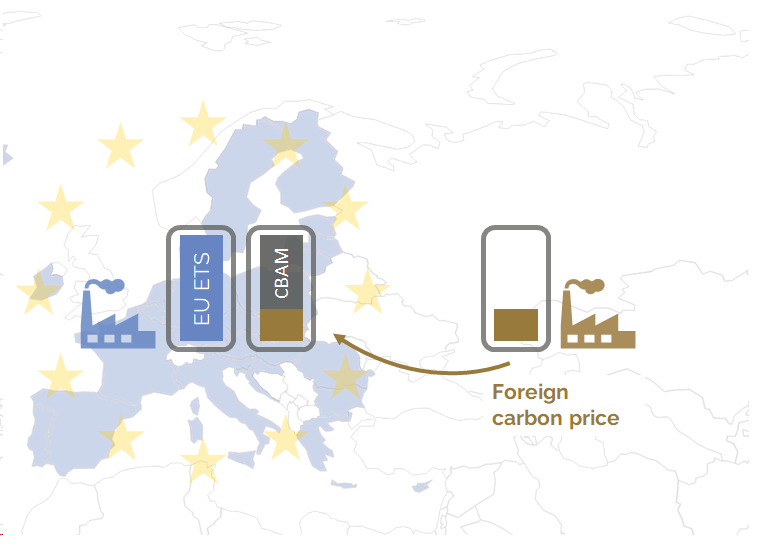
Figure 1 CBAM – basic principle. Source: carboneer.
CBAM currently covers six EU ETS sectors accounting for roughly 50% of emissions in the EU ETS: aluminium, cement, electricity, fertilisers, hydrogen, and iron & steel. For now, in the iron & steel sector, 478 CN goods are combined into 8 aggregated goods categories that share similar production routes, system boundaries and precursors. The CBAM covers mostly emissions of CO2 but includes perfluorocarbons for aluminium products and nitrous oxide for some fertilisers. For the iron & steel sector, only CO2 emissions are relevant.
The European Commission will designate additional products further along the value chain of CBAM goods for potential inclusion in the regulation no later than by the end of 2024. Starting in January 2028 and subsequently every two years, the Commission will evaluate the overall effectiveness of CBAM and deliberate on the potential inclusion of additional sectors within CBAM.
What are the CBAM obligations for importers?
To fulfil their CBAM obligations, importers or indirect customs representatives must register as authorised CBAM declarants prior to the import of CBAM goods into the EU. For each calendar year, regulated companies must calculate the emissions embedded in imports following the methodology set out below and report the results through the CBAM declaration by May 31st in the following year. Within these declarations, the importers may also claim a reduction of CBAM certificates to be surrendered when a carbon price has been effectively paid in the country of origin. The information contained in the CBAM declarations must be validated by third party verifiers that are accredited under the EU ETS regulation. Importers must get access to the CBAM registry, the platform where data on embedded emissions is communicated to authorities and where CBAM certificates are bought, surrendered, and excess certificates are sold back to the authorities.
The obligation to surrender CBAM certificates is phased in until 2034. For the transitional period, no CBAM certificates need to be purchased. Starting with the definitive period in 2026, importers need to surrender CBAM certificates. The number of CBAM certificates to be surrendered, increases proportionally to the phase-out of free allocations in the EU ETS: in 2026 regulated companies have to surrender CBAM certificates for 2.5% of their embedded emissions. This share gradually increases until it reaches 100% in 2034.
How to calculate embedded emissions
The EU defined detailed rules for the calculation of embedded emissions. Generally, CBAM declarants must consider direct emissions from the production process as well as indirect emissions from the generation of energy used in the production process. The CBAM Directive lists some goods (also from the iron & steel sector) for which only direct emissions are to be considered as the production facilities benefit from EU compensation for higher electricity prices due to carbon pricing. For the actual calculation of direct emissions, obliged entities can follow either of the methodologies:
When CBAM declarants lack the required data to perform the calculations they can revert to default values to be used as emissions factors. Default values are to be published by the end of 2023, the EU has however published a first study indicating the differences in emission intensities among the EU and its trading partners for CBAM goods (cf. figure 2).
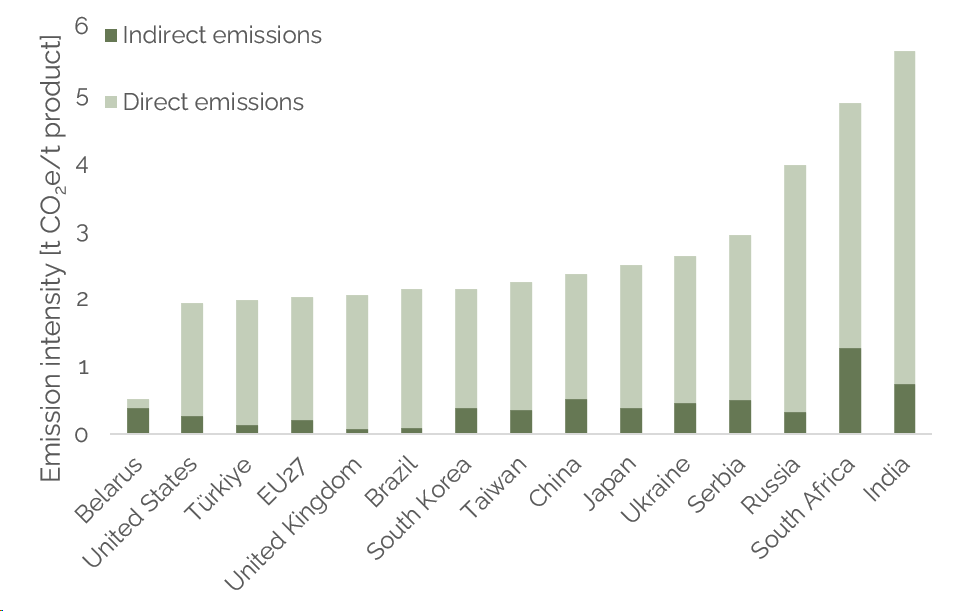
Figure 2 GHG emission intensity for CN code 7217 10 – Wires of non-alloy steel. Value for Belarus is based on the secondary production route. Source: Vidovic et al. (2023).
CBAM declarants can also ask their suppliers to register themselves as an operator located in a third country within the CBAM registry. They may apply above calculation methodology to their output and obtain verification according to EU ETS standards. Suppliers can then disclose the information on embedded emissions to CBAM declarants who in turn may use this information within their CBAM declarations.
Which rules apply in the transitional period?
Acknowledging the challenges posed by the CBAM for declarants, the EU gradually implements the mechanism with a transitional period which started October 1st 2023 and ends December 31st 2025. The transitional period aims to function as a trial and educational phase for all involved parties, including importers, producers, and authorities. Its purpose is to gather valuable data on embedded emissions in order to improve the methodology for the definitive period starting January 1st 2026. CBAM obligations are reduced to reporting during the transitional period (cf. figure 3).
To increase the learnings during the transitional phase, instead of annual CBAM declarations, declarants must submit CBAM reports on a quarterly basis. The first report, covering the embedded emissions from the fourth quarter 2023 is to be submitted by January 31st 2024. The calculation and general reporting requirements are however somewhat eased for the transitional phase: In addition to the calculation methodology described above (EU Method), for the transitional period, two additional methodologies are available:
For the transitional phase, all entities must report on both direct and indirect emissions. The exemptions for indirect emissions in the iron & steel sector mentioned above are only valid for the definitive period. Penalties can be imposed in cases where the reporting declarant fails to submit a correct or complete CBAM report or doesn’t rectify errors when initiated, with penalties ranging from EUR 10 to EUR 50 per tonne of unreported emissions.
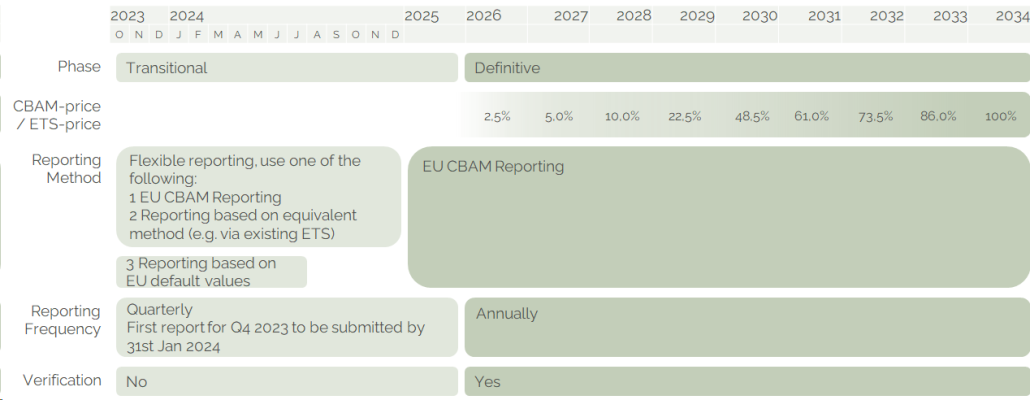
Figure 3 CBAM time schedule. Source: carboneer.
What are the immediate tasks for companies?
The definitive period is two years away, however, here are the preparations companies should conclude at once to comply with the legal obligations of the transitional period and to get a head start for the definitive period:
With the introduction of CBAM, emission monitoring and reporting along with carbon pricing plays an ever more important role for non-EU producers and importers. While the emission reporting obligations during the transitional period of CBAM are new to many companies and require comprehensive preparation, regulations on CBAM will evolve during the coming years and should be closely monitored by third country and EU producers as well as traders and importers alike. Details on CBAM implementation rules will for example still be required on the treatment of green electricity procurement through power purchase agreements in third-countries or on updated product lists subject to CBAM obligations. Ultimately, companies require a strategic approach towards these new realities of global trade and decarbonization.
Sources:
Vidovic, D., Marmier, A., Zore, L. and Moya, J., Greenhouse gas emission intensities of the steel, fertilisers, aluminium and cement industries in the EU and its main trading partners, Publications Office of the European Union, Luxembourg, 2023, doi:10.2760/359533, JRC134682.