Tag Archive for: Regulation

EU ETS Maritime: Obligations and options for action for maritime transport (Part 1)

Since 2005, the EU Emissions Trading System (EU ETS) has been the European Union’s (EU) central market-based climate instrument. Since 2018, the maritime transport sector has been required to measure, report and verify emissions in accordance with EU ETS rules (monitoring, reporting, verification – MRV), and emissions pricing began on 1 January 2024. In this first part of a series on the EU ETS for maritime transport, the basics of the obligations for affected companies are explained.

This extension of the EU ETS to maritime transport was part of the ‘Fit for 55’ package and covers all ships with a gross tonnage (GT) of 5,000 or more that call at ports in the EU or the European Economic Area (EEA), regardless of their flag. Shipping companies were therefore assigned to national administrative authorities on 30 January 2024 (source: EU). This assignment list is not exhaustive, as companies may still be subject to regulation after the deadline and are obliged to comply despite not being listed. The shipping sector already contributed around 6% of EU ETS emissions in its introductory year 2024 (source: EEA) and caused around 13% of all transport-related greenhouse gases in the EU in 2021 (source: EMSA).

The first evaluation of the integration of shipping into the EU ETS by the EU Commission in March 2025 shows that over 5,000 shipping companies are registered on the European MRV platform THETIS-MRV and that verified monitoring plans for more than 15,000 ships are available (source: EU Commission). Figure 1 illustrates the geographical scope of the EU ETS for maritime transport: 100% of emissions for intra-EU/EEA voyages are covered, while 50% of emissions are subject to taxation for voyages to/from third countries. This regulation aims to prevent carbon leakage and minimise avoidance behaviour.


Scope of EU ETS Maritime

Figure 1: Example illustration of the scope of the EU ETS maritime with the 100/50% rule (source: carboneer)

Gradual inclusion of shipping

The EU ETS operates on a cap-and-trade principle with an annually decreasing emissions cap. Shipping companies must purchase corresponding emission allowances (European Union Allowances (EUA)) for each tonne of CO₂ equivalent emitted and surrender them in the Union Registry each year. Companies with low CO₂ abatement costs can sell their EUAs to companies with high abatement costs. This means that CO₂ is avoided where it is most efficient and cost-effective.

The inclusion of shipping in the EU ETS is taking place in stages. While only CO₂ emissions are subject to pricing for the time being, methane and nitrous oxide will also be priced from 2026. From 2027, the system will also cover offshore vessels with a GT of over 5000. While smaller ships between 400 and 5,000 GT have been part of the MRV since 2025, it is still unclear whether and when the emissions of these ships will also be priced. This is expected to be decided in 2026 as part of a major EU ETS review.

In addition to the gradual introduction of several ship and emissions categories, pricing will also be phased in over a three-year period. From 2024, affected shipping companies will have to surrender EUAs for 40% of their verified emissions, 70% in 2025 and 100% from 2026 (Figure 2).

EU ETS maritime implementation period

Figure 1: EU ETS maritime implementation period (source: carboneer according to EU Commission)

Responsibilities and ISM delegation

The obligated ‘shipping company’ within the meaning of the EU ETS Directive is, by default, the registered shipowner. The shipowner may contractually delegate the EU ETS obligations to the company that is responsible for ship operations under the International Safety Management (ISM) Code. A prerequisite for delegation is that a proper and complete mandate agreement in accordance with the detailed requirements of Implementing Regulation (EU) 2023/2599 has been submitted to the competent authority (source: DEHSt). The mandate agreement must document the assumption of all EU ETS obligations and be submitted to both the administrative authority and the verification body. Bareboat charters can only act as shipping companies if they are also ISM companies. The company responsible for MRV of emissions and the obligations under the EU ETS must always be identical. In practice, this requirement poses considerable challenges, as many shipping companies operate their fleets through multiple ISM managers who use different management and emission measurement procedures.

Annual obligations

The annual compliance cycle of the EU ETS for shipowners and ISM companies follows a clearly structured annual rhythm that begins even before the first port call. Before operations commence, an approved monitoring plan must be in place, which is reviewed by an accredited verifier and approved by the competent administrative authority (source: EU Commission). The verified plan must be submitted to the competent administrative authority via the THETIS MRV portal by 1 April 2024 at the latest or within three months of the first port call under EU jurisdiction. Throughout the reporting year, ships continuously record their greenhouse gas emissions using the methods defined in the monitoring plan.

By 31 March of the following year at the latest (Figure 3), this data must be verified and include both a ship-level emissions report and a company-level emissions report, which are generated via the THETIS-MRV portal.

Compliance cycle in the EU ETS (source: carboneer)

Figure 3: Compliance cycle in the EU ETS (source: carboneer)


A Document of Compliance can then be created via THETIS-MRV, which must be carried on all affected ships of the relevant company. In order to have sufficient buffer for any corrections, verification should begin promptly after the start of the year. Once the shipping company has assigned the verifier to the Union Registry, the verifier can confirm the verified emissions directly in the Maritime Operator Holding Account (MOHA) in the Union Registry.

At the same time, affected companies use the MOHA to purchase, trade and submit EUAs. The central compliance deadline for the year is 30 September. By this date, sufficient EUAs must be submitted via the MOHA in the Union Registry to cover the verified company emissions. To ensure that the reporting, verification and submission processes run smoothly, a tight internal schedule is recommended: continuous monitoring, early data validation by verification bodies, timely entries in THETIS-MRV and the Union Registry, and timely procurement and provision of the required EUAs.

Sanctions and measures by authorities

In the EU ETS, violations of the obligation to surrender EUAs by 30 September of each year are subject to a fine. The penalty payment is €100 per tonne of CO₂ equivalent for emissions caused in the previous year for which no EUA was submitted. Since 2012, the value has been increasing annually in line with inflation, meaning that violations in 2024 will incur a penalty of €132.06 per tonne of CO₂ equivalent (source: DEHSt). Regardless of the penalty payment, the obligation to retroactively purchase and submit the missing EUAs remains. Similarly, if EUAs are not submitted, the names of the defaulting shipping companies are for exampled published in the Federal Gazette of Germany once the decision has become final; at EU level, the Commission also maintains an annual list of non-compliant operators.

This ‘naming and shaming’ increases the reputational risk, and in the event of repeated violations in two or more reporting periods, the flag or port state authorities may, as the most severe measure, deny access to EU ports or also detain ships in the home port of an EU state. Since liability applies company-wide, a single ship violation can affect the operator’s entire fleet (source: DEHSt). Consistent measurement of emissions, timely verification and timely procurement and submission of EUAs therefore remain essential to avoid financial penalties and operational restrictions. In the second part of our series, we will look at price and market developments in the EU ETS, the cost implications for shipping companies and the complementary rules under the FuelEU Maritime Regulation.

Sources

DEHSt, 2025, EU Emissions Trading 1 for Maritime Transport, URL: https://www.dehst.de/EN/Topics/EU-ETS-1/Maritime-Transport/EU-ETS-1-Maritime-Transport/eu-ets-1-maritime-transport_node.html

DEHST, 2025, EU ETS 1 Sanctioning, URL: https://www.dehst.de/EN/Topics/EU-ETS-1/EU-ETS-1-Information/Sanctioning/sanctioning_node.html

DEHSt, 2025, Maritime Transport-FAQ, URL: https://www.dehst.de/SharedDocs/FAQ/EN/maritime-transport/FAQList-SV.html#faq-id-299956

EEA, 2025, EU Emissions Trading System data viewer, URL: https://www.eea.europa.eu/en/analysis/maps-and-charts/emissions-trading-viewer-1-dashboards

EMSA, 2025, Facts and Figures, URL: https://emsa.europa.eu/publications/item/4515-emter-facts-and-figures.html

EU, 2024, Kommission Implementing Decision EU) 2024/411, URL: https://eur-lex.europa.eu/legal-content/EN/TXT/PDF/?uri=OJ:L_202400411

EU Kommission, 2025, FAQ – Maritime transport in EU Emissions Trading System (ETS), URL: https://climate.ec.europa.eu/eu-action/transport-decarbonisation/reducing-emissions-shipping-sector/faq-maritime-transport-eu-emissions-trading-system-ets_en

EU Kommission, 2025, Report from the Commission: Review of Regulation (EU) 2015/757 on the monitoring, reporting and verification of greenhouse gas emissions from maritime transport in relation to the potential inclusion of ships below 5 000 gross tonnage but not below 400 gross tonnage  , URL: https://eur-lex.europa.eu/legal-content/EN/TXT/PDF/?uri=CELEX:52025DC0109

EU Kommission, 2025, Monitoring, reporting and verification URL: https://climate.ec.europa.eu/eu-action/eu-emissions-trading-system-eu-ets/monitoring-reporting-and-verification_en

Effective CBAM Cost Management (Part 1): CBAM Certificate Demand and Explicit Costs

In the first part of a series on effective CBAM cost management, we use a specific case study to derive the CBAM certificate requirements and the resulting explicit costs. Importers of CBAM goods may already incur high costs for imports in 2026 and should prepare for this at an early stage.

Assessing the financial impact of CBAM

While only reporting obligations apply for importers or indirect customs representatives in 2025, CBAM will enter the regular phase from 2026 (review our article on CBAM here). Above all, this means that, in addition to continuing to report imported goods and corresponding emissions, authorised CBAM declarants will have to acquire CBAM certificates for the embedded emissions contained in the imports from 1 January 2026 and submit them annually by 31 August of the following year. From the perspective of an importer or indirect customs representative, this has strategic relevance and the impact on risk and liquidity management of this additional financial burden should therefore already be analysed in 2025 in order to:

  • Plan a budget for the procurement of CBAM certificates
  • Develop a purchasing strategy for the acquisition of CBAM certificates
  • Manage or hedge price uncertainties of CBAM certificates and thus costs for imported goods
  • Adapt supplier and customer contracts to avoid being stuck with CBAM costs
  • Integrate the effects of CBAM into strategic purchasing decisions

The steps for developing a targeted strategy for CBAM cost management are described below using a case study. The starting point is to determine the relevant CBAM emissions, as this determines the quantity of CBAM certificates to be purchased. The following formula shows the most important parameters. To simplify matters, the assumption here is that no CO2 prices were paid in the upstream supply chain.

Calculation of the demand for CBAM allowances and relevant data sources (without taking into account CO2 prices in the upstream supply chain)

Figure 1: Calculation of the demand for CBAM allowances and relevant data sources (without taking into account CO2 prices in the upstream supply chain)

In addition to the information on the imported products and the embedded emissions they contain, the CBAM benchmarks are particularly relevant for calculating the quantity of CBAM certificates to be purchased. The CBAM benchmarks are expected to be published in Q4 2025. and will be based on the benchmarks for determining the free allocations in the EU Emissions Trading System (EU ETS). The CBAM benchmarks will therefore only be officially announced relatively shortly before the date on which CBAM allowances are purchased. However, a scenario analysis can already be used today to estimate the CBAM certificate requirement with the aid of the corresponding EU ETS benchmarks.

Analyse of the CBAM certificate demand

To illustrate the approach, the following case study uses an annual import volume of 100,000 tonnes of steel ingots in equal parts each quarter. Other important assumptions for modelling the CBAM certificate demand are:

  • No deductible CO2 prices in the upstream supply chain
  • Direct specific emissions: 2.58 tCO2/tproduct
  • Indirect specific emissions: 0.43 tCO2/tproduct
  • Use of a combination of EU ETS benchmarks as a proxy for the CBAM benchmark
  • Inclusion of indirect emissions from 2030 (envisioned in the CBAM Regulation, not yet part of the legal text)

The quantity of CBAM certificates to be purchased annually for the CBAM declarant in the case study is shown below. The importer must purchase over 130,000 CBAM certificates for its imports in 2026, which corresponds to pricing of 50 % of the imported direct specific emissions. This means that a significant proportion of embedded emissions could be priced right from the start of the CBAM definitive phase. This depends in particular on the level of embedded emissions in the imported CBAM goods and therefore on the CO2 intensity of the production process of the corresponding manufacturer. An analysis per import unit, CBAM product and supplier can provide information on important metrics such as the absolute and relative contribution to the need for CBAM certificates.

Estimation of CBAM certificate demand for 2026-2034 with import of 100,000 tonnes of steel ingots per year
Figure 2: Estimation of CBAM certificate demand for 2026-2034 with import of 100,000 tonnes of steel ingots per year (source: carboneer CBAMCC model)

Important: The quantity of CBAM certificates that must be held by CBAM applicants for imported goods is 50% of the imported emissions since the beginning of the year at the end of each quarter (final decision still pending), with an exemption to this rule for imports in 2026, as CBAM certificates can only be purchased from 2027 onwards. However, the actual quantity of CBAM certificates to be submitted is ultimately based on the verified embedded emissions of the imported goods or the standard values of the EU Commission that are yet to be published. This difference between verified emissions values and default values can be significant in some cases. A precise analysis of the relevant imports and associated embedded emissions is essential for estimating the need for CBAM allowances from 2026 onwards.

Cost estimate and liquidity demand for CBAM certificates

The annual costs for CBAM certificates assuming constant import volumes in our case study can now be estimated. Forecasts and scenarios for emission allowance (EUA) prices in the EU ETS can be used for this purpose, as CBAM allowance prices for imports from 2027 are formed on a rolling basis by the weekly average of EUA auction prices (currently at around 70 EUR/tCO2). The carboneer CBAMCC model uses price projections from various publications for this purpose. The projected costs for the CBAM certificates for constant annual imports are shown below; the uncertainty factor due to uncertain price developments in the EU ETS is illustrated by the bars.

Forecast of CBAM certificate costs for 2026-2034 for imports of 100,000 tonnes of steel ingots per year

Figure 3: Forecast of CBAM certificate costs for 2026-2034 for imports of 100,000 tonnes of steel ingots per year (source: carboneer CBAMCC model)

The liquidity requirement for CBAM certificates for the importer or CBAM applicant in the case study increases from around EUR 10 million for imports in 2026 to EUR 25-45 million in 2030. CBAM certificates are neither tradable between companies nor valid in the long term. CBAM certificates purchased under the 50% holding requirement in the previous year can be sold back to the regulatory authority, while excess CBAM certificates will be cancelled on 1 October of the second year after purchase without compensation (final decision still pending). Obligated companies should therefore prepare to understand the financial impact of CBAM.

In our next article, we will go into detail about the options available to importers to manage risk and hedge their CBAM certificate costs.

Carbon markets: Which role does biomass play?

Although compliance and voluntary carbon markets vary in scope, mechanisms and participants, biomass occupies a unique place. In compliance carbon markets such as the EU ETS, participants are obliged to monitor and report their emissions and ultimately pay for them. Using biomass in industrial facilities can allow for reduced financial burdens. Regulators set rules around biomass use and sustainability criteria to comply with. A large part of voluntary carbon market credits is generated by nature-based solutions, including forestry and other biomass-related projects. These projects are however under intense scrutiny due to issues regarding transparency and associated climate claims. Novel carbon removal solutions with biomass as feedstock show promising development and renewed regulatory oversight could restore trust.

Which CO2 and which carbon markets?

To assess the relevance of carbon markets for biomass and vice versa, requires an understanding of different types of emissions and how carbon markets account for them. The sources of CO2 emissions and their final sink can be categorized into four main pathways (Figure 1).

  • Unabated carbon emissions from fossil sources add emissions to the atmosphere (grey and black)
  • Abated emissions from fossil sources through carbon capture and storage (CCS) with long-term storage might not add additional GHG emissions to the atmosphere (purple)
  • Negative emissions through nature-based or technological carbon dioxide removal (CDR) solutions taking CO2 out of the atmosphere and storing it durably (green)
  • Utilisation of CO2 through carbon capture and utilisation (CCU) technologies, where the ultimate source of the CO2 (atmospheric or fossil) and the final product into which the CO2-molecules has been transformed determine the climate impact (blue)

Detailed analysis of the technological pathways, supply-chain emissions, and substitution effects is required to establish emission reduction potentials of these solutions.
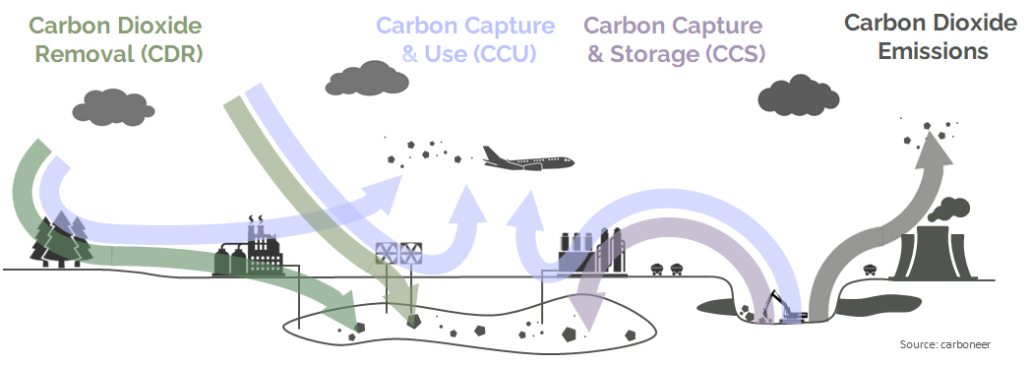
Figure 1: Different pathways of CO2: fossil emission, CCS, CCU and carbon dioxide removal. Source: carboneer

Compliance and voluntary carbon markets both incentivise emission reduction or carbon removal, however each from a different angle. Compliance carbon markets aim to fulfill national or regional climate targets. By putting a price tag on emissions and they incentivise compliant actors to reduce their emissions in a cost-efficient way. The mechanics of voluntary carbon markets (VCM) aim at financially supporting projects that either reduce emissions or provide negative emissions through CDR. Private actors can purchase carbon credits from project developers to offset or neutralise their corporate emissions.

The EU ETS: zero rating for biomass

The EU ETS is one of the largest and most mature compliance carbon markets. Since its inception in 2005, the EU ETS has been a cornerstone of EU climate policy, covering 35-40% of the region’s emissions. Large industrial facilities, such as steel mills, chemical plants, cement kilns, and power plants as well as aviation and maritime transport operators need to monitor and report their annual emissions. For each ton of CO2-eq emitted, the compliant entity must surrender an emission allowance. The price of this allowance is determined at the market. Currently, many industrial facilities still receive free allowances. To prevent carbon-leakage while facing out this free allocation, the Carbon Border Adjustment Mechanism (CBAM) requires importers of certain goods from non-EU countries to report the embedded carbon emissions in imports and from 2026 onwards also to pay the same carbon price as EU-based industry. Most emissions from buildings and road transport in the EU are not yet subject to a carbon price. This changes with the new EU ETS 2 covering another 35-40% of the EU’s GHG emissions. Since 2024, suppliers of liquid, gaseous or solid fuels are required to monitor and report emissions released by their fuels at the end-user. Pricing in the EU ETS 2 starts in 2027.

Carbon in biomass ultimately comes from the atmosphere. When combusted, only CO2 stored in the biomass is released back to the atmosphere. However, for a comprehensive life cycle assessment, factors such as land-use emissions due to biomass harvesting or emissions along the value chain need to be considered. According to current regulations, emissions from biomass and biofuels in the EU ETS 1, CBAM and EU ETS 2 can generally be counted as zero, thus reducing the number of allowances to be purchased by compliant entities and reducing their costs (Figure 2). Depending on the type of biomass and its utilisation, compliance with the Renewable Energy Directive for sustainability or GHG saving criteria needs to be achieved.
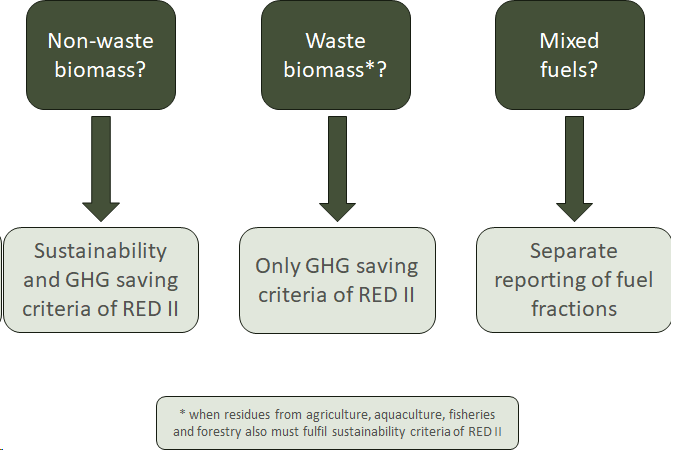
Figure 2: Criteria for biomass utilisation in the EU ETS 1. Source: carboneer

VCM: Carbon removal with biomass

Forests, mangroves, biochar kilns and waste-to-energy plants with CCS all have in common that they are examples of biomass-based project on the VCM. Private entities purchase carbon credits from project developers to offset or neutralise their (hard-to-abate) emissions. These projects either reduce emissions or remove CO2 from the atmosphere and must follow certain standards and methodologies for project set-up and emission calculation. Third-party verification of the projects’ climate effects is needed to create trust and transparency in voluntary carbon markets where regulatory oversight is only rudimentary.

While a wide range of VCM methodologies and projects exist, biomass-based projects are ubiquitous and particularly divers. Many biomass VCM projects potentially create negative emissions (to stay within the targets of the Paris Agreement, estimates for the required global carbon removal capacity range from 5-10 Gt/year or 5-20% of today’s total emissions). While trees might store atmospheric carbon for decades, technological solutions, such as pyrolysis with biochar or bioenergy with CCS remove carbon for hundreds or thousands of years. Project developers and buyers of credits on the VCM need to navigate complexities arising from cost considerations, project types and quality, and applicable methodologies and standards (Figure 3).

Figure 3: Carbon removal solutions and considerations for VCM projects. Source: carboneer

To reduce the lack of credibility that has plagued the VCM and associated climate claims of credit buyers, the EU currently develops its own methodologies under the Carbon Removal Certification Framework. As corporates are increasingly under pressure to develop credible climate strategies, carbon removal solutions utilising biomass have their role to play. Several announcements of large-scale credit purchases by corporates from biochar and bioenergy with CCS project developers underscores that point.

Biomass and carbon markets: the take-aways

CO2 is not CO2: The ultimate origin of the molecule matters. Compliance and voluntary carbon markets assess emissions from different perspectives and objectives. Due to the wide array of biomass applications, rules on eligibility as well as on emission accounting in compliance and voluntary carbon market differ. Biomass use in the ETS can reduce costs for industrials and allow for decarbonisation at the same time. Biomass enables carbon removal solutions, but stakeholders need to navigate the murky waters of voluntary carbon markets. Finally, interactions between the EU ETS and the VCM might be restored against the backdrop of industrial carbon management policies, the need to scale carbon removal and to provide market stability in the ETS. Complexities abound when biomass meets carbon markets.

This article appeared first in Bioenergy International No 1-2024
The EU ETS 2 – pricing emissions in buildings and road transport

The European Union’s Emissions Trading System (EU ETS) constitutes a cornerstone of the EU’s strategy to combat climate change since its establishment in 2005. The new EU ETS 2, implemented from 2024 covers emissions from buildings, road transport, and additional sectors such as fuel use in small industrial installations. The EU ETS 2 is founded upon the objectives of the EU Climate Law and the Fit-for-55 package and requires the fuel suppliers to monitor and report emissions in their fuels. From 2027 when the EU ETS 2 is fully operational, emission allowances need to be purchased and surrendered based on the emissions in the fuels sold. This new emission trading system adds a further layer of complexity to the regulatory compliance landscape.

Key facts about the EU ETS 2

The EU ETS 2 will be running in parallel to the EU ETS 1 and encompasses areas that were previously excluded, such as the buildings and road transport sectors. The operational principle of the EU ETS 2 is based on a cap-and-trade system, where an annually decreasing cap is set on total emissions and a corresponding number of allowances is auctioned to regulated entities. One allowance needs to be surrendered per ton of CO2 emitted. The EU ETS 2 is designed to reduce emissions by 42% by 2030 in comparison to 2005 levels. In contrast to the EU ETS 1, which regulates emissions at the point of origin, the EU ETS 2 places the compliance burden upstream at the release for consumption of fuels and not at the point where fuels are combusted. Estimates of the EU Commission expect up to 11.400 fuel suppliers, distributers and resellers to be regulated (regulated entities). This new system harmonises national and EU responsibilities, targets and emissions pricing.

To determine emissions under the scope of the EU ETS 2, a comprehensive monitoring, reporting, and verification (MRV) system is implemented at the company-level. To avoid double counting, emissions from fuel combustion under the EU ETS 1 should not be counted in the EU ETS 2. This requires fuel suppliers and their clients to provide proof and documentation in such cases. The EU ETS 2 permits the coexistence of national carbon taxes with the EU ETS 2, allowing EU Member States to exempt companies from EU ETS 2 requirements until 2030 if national measures are more stringent. In Germany the national ETS is only fully integrated into the EU ETS 2 from 2027 onwards, which makes a double reporting of emissions necessary for 2024 – 2026.

First compliance deadlines in 2024

For companies subject to the EU ETS 2, key compliance activities should already be ongoing, and deadlines are approaching soon. Companies must commence monitoring emissions by January 2024 and report those emissions by 30 April 2025. The timeline for compliance is stringent, as Figure 1 indicates.

Figure 1: Timeline of EU ETS 2 compliance obligations. Source: carboneer

To monitor emissions in accordance with the rules of the EU ETS 2, by 31 August 2024 a monitoring plan should be submitted to the competent national authority. Full compliance, especially procuring and surrendering allowances under the EU ETS 2 is required from 2027, and failure to meet these deadlines can result in significant penalties and legal repercussions, making it imperative for companies to commence preparations without delay. The potential consequences of non-compliance include financial penalties and loss of competitiveness.

From 2027 onwards allowances under the EU ETS 2 will be auctioned. An allocation of free allowances such as during the start of the EU ETS 1 and currently still applied to EU industry will not exist. To regulate the supply of allowances and maintain price stability, a market stability reserve will be implemented. The initial allowance cap in 2027 will be determined by applying a 5.1% annual reduction to the 2024 emission level. From 2025 onwards, this linear reduction factor increases to 5.38%. This implies that the total supply of allowances in 2027 will be approximately 1.25 billion, declining to below 800 million by 2030. Figure 2 illustrates the decline in the allowance auction volumes over time, aligned with the EU’s long-term sectoral climate targets.

Figure 2: Approximate EU ETS 2 allowance supply. Source: carboneer

Challenges and complexity

The EU ETS 2 presents a significant challenge for companies as they need to develop comprehensive emission monitoring plans, detailing their activities, fuel types, and emission calculation methodologies to comply with their obligations. Especially the calculation of the emissions can be a complex undertaking. First, a scope factor needs to be established to determine the portion of a company’s fuel sales that lie within the regulated activities, such as buildings and road transport. The scope factor ranges from 0 (no fuel in scope) to 1 (all fuel in scope). This ensures only relevant emissions are counted. Using the correct emission factor for different fuels along with the quantity of fuels, the total CO2-emissions can be calculated.

To ensure data quality, the MRV follows a tier system that categorises data accuracy from Tier 1 (least accurate) to Tier 4 (most accurate). Higher tiers, used for companies with more larger fuel streams and thus higher emissions, require more precise data, ensuring reliable results. Importantly, emissions from fuels based on biomass can be zero-rated if they fulfil the criteria on biomass under the Renewable Energy Directive (RED) II and the upcoming RED III.

Monitoring plans must gain approval from the competent national authority, underscoring the importance of early and thorough preparation. The emission reporting for 2024 is due 30 April 2025, with third-party verification becoming mandatory from the 2025 emission report on. The introduction of the EU ETS 2 pricing can result in significant cost increases, which will have an impact on both operational expenses and consumer prices. Figure 3 displays price forecasts for the allowances in the EU ETS from different sources. As prices are determined through demand and supply, they can be expected to exhibit significant volatility, with forecasts ranging from €48 to €340 per tCO2 by 2030. Companies ought to manage cost risk via tailored procurement strategies for EU ETS 2 allowances.

Figure 3: Forecast of EU ETS 2 allowances prices in 2030. Data Source: UBA, 2024, Source: carboneer


The Social Climate Fund plays a crucial role in mitigating the financial impact on vulnerable consumers in the EU. Its objective is to support vulnerable households and micro-enterprises that are impacted by the transition to a low-carbon economy. The fund, financed by revenues from the auctioning of allowances, provides financial assistance for measures that reduce emissions and energy costs. One example is the provision of subsidies to enhance the energy efficiency of residential properties such as improvements to insulation and the installation of more efficient heating systems. This dual focus on households and businesses ensures a broader impact, promoting social equity and economic resilience, and helps to offset some of the financial burdens and operational challenges posed by the EU ETS 2.

To understand the potential impact of the rising allowance prices, Figure 4 illustrates how different fuel types are being impacted by different allowance prices.

Figure 4: Price impact on different fuels under varying EU ETS 2 allowance prices. Source: carboneer

What should an EU ETS strategy entail?

Due to the complexity of the EU ETS 2 and its stringent timeline, a sound EU ETS 2 strategy is essential. But what does a company need to prepare for?

MRV details and compliance cycle

  • Development of comprehensive monitoring plans that cover all relevant activities, fuel types, and emission calculation methodologies
  • Monitoring plans must be approved by national authorities
  • Verification of emissions

Compliance obligations:

  • Detailed understanding of the EU ETS 2 rules and associated regulation
  • Build capacity, assign responsibilities, internal and external communication
  • Access to registries and EU ETS 2 allowances

Financial impact assessment:

  • Assessment of EU ETS 2 exposure and cost forecasts
  • Implementation of strategies to manage costs and pass on costs to consumers
  • Risk management and allowance procurement strategies to reduce financial exposure

Conclusion

The EU ETS 2 is a crucial tool in the European Union’s strategy to combat climate change by establishing a new cap-and-trade system for fuels in sectors such as buildings and road transport. It aims to reduce emissions by 42% by 2030 compared to 2005 levels. The system introduces complex obligation for companies that require planning and a compliance strategy, including stringent monitoring, reporting, and verification processes starting from 2024. With allowance prices expected to rise significantly, the financial implications are substantial and necessitate robust risk management and hedging strategies. Companies should act now to understand and navigate these new regulations, ensuring compliance and maintaining competitiveness.

Authors: Florian Schlennert and Simon Göß.

Sources: UBA, 2024, Supply and Demand in the ETS 2, URL: https://www.umweltbundesamt.de/publikationen/supply-demand-in-the-ets-2


Implications of the Carbon Border Adjustment Mechanism for the Iron & Steel sector

On October 1st 2023, the Carbon Border Adjustment Mechanism (CBAM) became effective. As a measure to limit carbon leakage, the instrument complements the European Emission Trading System (EU ETS) by establishing a carbon price on imported goods that is equivalent to the carbon price on domestically produced goods. CBAM introduces a set of reporting and compliance obligations for importers of goods into the European Union.

Why is CBAM needed?

In a nutshell, CBAM is a policy instrument aiming to reduce the risk of carbon leakage under the EU ETS, the largest carbon pricing scheme worldwide that covers approximately 40% of the EU’s emissions. Carbon leakage refers to the phenomenon where climate policy restricts the competitiveness of domestic manufacturers compared to foreign producers that underly less stringent policies and can produce in a less expensive but environmentally more harmful way. The risk then arises that industry moves from the regulated jurisdiction to countries with lower environmental standards. Climate policy that does not manage carbon leakage could lead to the relocation of emission-intensive manufacturers abroad. Emissions would be exported instead of mitigated, and the domestic economy remains weakened.

Under the EU ETS, regulated entities, that are subject to the risk of carbon leakage, receive emission allowances free of charge conditional on their emission intensity in relation to a sectoral benchmark. This way, the competitive disadvantage of European climate policy is mitigated. The distribution of free allowances is phased out until 2034 and CBAM serves as a substitute to reduce the risk of carbon leakage for EU’s industry from there on.

What is the mechanism & scope of CBAM?

CBAM starts with a transitional period from October 2023 until end of 2025 with only reporting obligations for importers of certain goods. Importers or indirect customs representatives that transfer any CBAM goods into the EU, are obliged to calculate and report the embedded emissions that occur during the production process of CBAM goods and their precursors according to detailed rules.

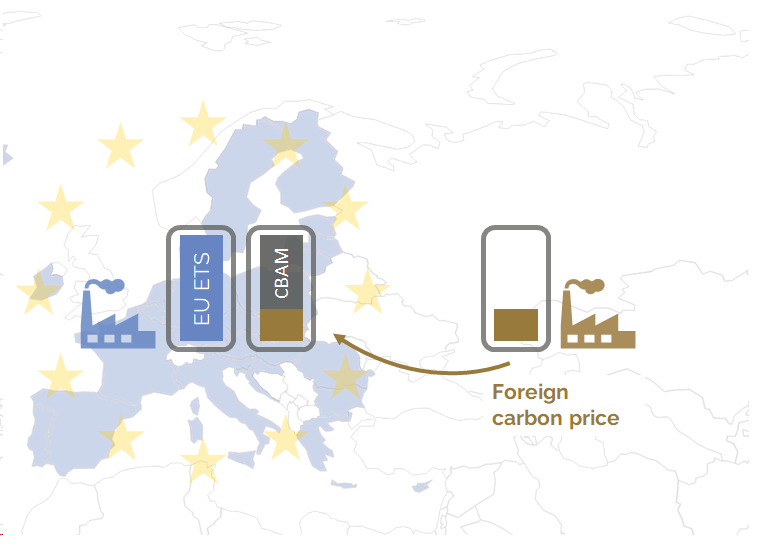
The definitive period of CBAM starts in 2026. From then onwards, importers must purchase a proportional amount of CBAM certificates. The price of CBAM certificates is closely linked to the price of emission allowances in the EU ETS, momentarily around 85 Euro per ton of CO2e and expected to range between 100 and 150 Euro by 2030. Any carbon price due for the embedded emissions in countries of origin reduces the number of CBAM certificates to be surrendered (cf. figure 1). This mechanism assimilates the carbon price due for foreign and domestic goods that are sold on the EU market. Compared to the system of free allocations, CBAM not only increases the EU ETS revenues (free allocations of emission allowances are phased out), but also incentivizes ambitious carbon prices and industrial decarbonization abroad.

Figure 1 CBAM – basic principle. Source: carboneer.

CBAM currently covers six EU ETS sectors accounting for roughly 50% of emissions in the EU ETS: aluminium, cement, electricity, fertilisers, hydrogen, and iron & steel. For now, in the iron & steel sector, 478 CN goods are combined into 8 aggregated goods categories that share similar production routes, system boundaries and precursors. The CBAM covers mostly emissions of CO2 but includes perfluorocarbons for aluminium products and nitrous oxide for some fertilisers. For the iron & steel sector, only CO2 emissions are relevant.

The European Commission will designate additional products further along the value chain of CBAM goods for potential inclusion in the regulation no later than by the end of 2024. Starting in January 2028 and subsequently every two years, the Commission will evaluate the overall effectiveness of CBAM and deliberate on the potential inclusion of additional sectors within CBAM.

What are the CBAM obligations for importers?

To fulfil their CBAM obligations, importers or indirect customs representatives must register as authorised CBAM declarants prior to the import of CBAM goods into the EU. For each calendar year, regulated companies must calculate the emissions embedded in imports following the methodology set out below and report the results through the CBAM declaration by May 31st in the following year. Within these declarations, the importers may also claim a reduction of CBAM certificates to be surrendered when a carbon price has been effectively paid in the country of origin. The information contained in the CBAM declarations must be validated by third party verifiers that are accredited under the EU ETS regulation. Importers must get access to the CBAM registry, the platform where data on embedded emissions is communicated to authorities and where CBAM certificates are bought, surrendered, and excess certificates are sold back to the authorities.

The obligation to surrender CBAM certificates is phased in until 2034. For the transitional period, no CBAM certificates need to be purchased. Starting with the definitive period in 2026, importers need to surrender CBAM certificates. The number of CBAM certificates to be surrendered, increases proportionally to the phase-out of free allocations in the EU ETS: in 2026 regulated companies have to surrender CBAM certificates for 2.5% of their embedded emissions. This share gradually increases until it reaches 100% in 2034.

How to calculate embedded emissions

The EU defined detailed rules for the calculation of embedded emissions. Generally, CBAM declarants must consider direct emissions from the production process as well as indirect emissions from the generation of energy used in the production process. The CBAM Directive lists some goods (also from the iron & steel sector) for which only direct emissions are to be considered as the production facilities benefit from EU compensation for higher electricity prices due to carbon pricing. For the actual calculation of direct emissions, obliged entities can follow either of the methodologies:

  1. The calculation-based approach where raw materials and inputs used in production are combined with calculation factors such as net calorific values or emission factors.
  2. The measurement-based approach where emissions are determined through continuous measurement of flue gas flow and greenhouse gas concentrations in flue gases.

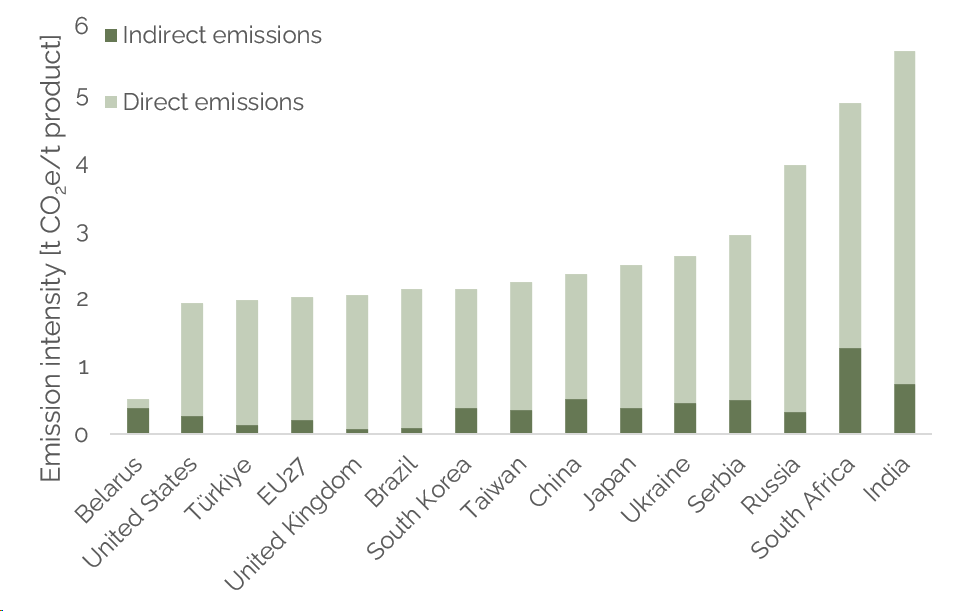
When CBAM declarants lack the required data to perform the calculations they can revert to default values to be used as emissions factors. Default values are to be published by the end of 2023, the EU has however published a first study indicating the differences in emission intensities among the EU and its trading partners for CBAM goods (cf. figure 2).

Figure 2 GHG emission intensity for CN code 7217 10 – Wires of non-alloy steel. Value for Belarus is based on the secondary production route. Source: Vidovic et al. (2023).

CBAM declarants can also ask their suppliers to register themselves as an operator located in a third country within the CBAM registry. They may apply above calculation methodology to their output and obtain verification according to EU ETS standards. Suppliers can then disclose the information on embedded emissions to CBAM declarants who in turn may use this information within their CBAM declarations.

Which rules apply in the transitional period?

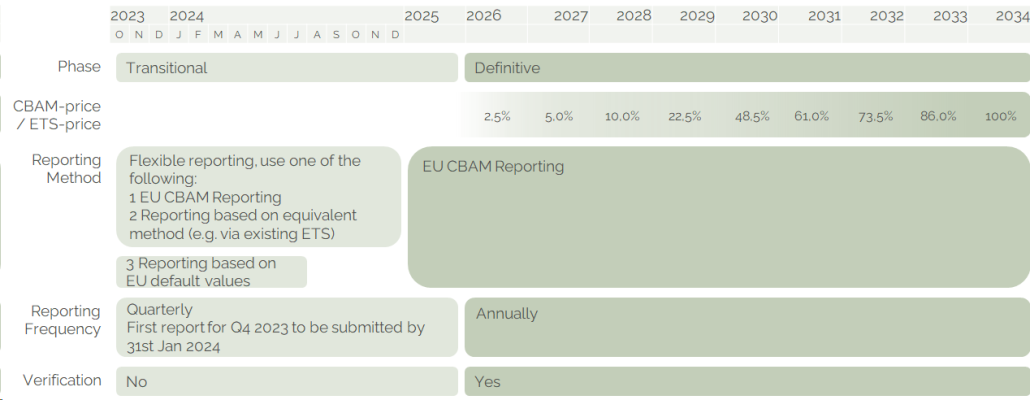
Acknowledging the challenges posed by the CBAM for declarants, the EU gradually implements the mechanism with a transitional period which started October 1st 2023 and ends December 31st 2025. The transitional period aims to function as a trial and educational phase for all involved parties, including importers, producers, and authorities. Its purpose is to gather valuable data on embedded emissions in order to improve the methodology for the definitive period starting January 1st 2026. CBAM obligations are reduced to reporting during the transitional period (cf. figure 3).

To increase the learnings during the transitional phase, instead of annual CBAM declarations, declarants must submit CBAM reports on a quarterly basis. The first report, covering the embedded emissions from the fourth quarter 2023 is to be submitted by January 31st 2024. The calculation and general reporting requirements are however somewhat eased for the transitional phase: In addition to the calculation methodology described above (EU Method), for the transitional period, two additional methodologies are available:

  1. Until December 31st 2024, embedded emissions can be determined through third country national systems such as carbon pricing schemes or monitoring systems whose accuracy and coverage is similar to the EU ETS.
  2. Until July 31st 2024, embedded emissions can be determined using only default values from the EU or elsewhere if calculation methodologies align.

For the transitional phase, all entities must report on both direct and indirect emissions. The exemptions for indirect emissions in the iron & steel sector mentioned above are only valid for the definitive period. Penalties can be imposed in cases where the reporting declarant fails to submit a correct or complete CBAM report or doesn’t rectify errors when initiated, with penalties ranging from EUR 10 to EUR 50 per tonne of unreported emissions.

Figure 3 CBAM time schedule. Source: carboneer.

What are the immediate tasks for companies?

The definitive period is two years away, however, here are the preparations companies should conclude at once to comply with the legal obligations of the transitional period and to get a head start for the definitive period:

  • Identify which of your imports are subject to CBAM regulations. Engage with suppliers and manufacturers to gather emissions data for imported goods. Collect information on carbon pricing schemes in countries of origin for your CBAM goods.
  • Get registered as CBAM declarant or have your indirect customs representative getting registered.
  • Get access to the transitional CBAM registry. This is the interface for regulators and regulated entities for the transitional period.
  • Learn how to handle the CBAM reporting template published by the EU.
  • Establish processes to collect emissions data and set aside personnel capacities to handle CBAM duties.
  • Make use of EU ETS allowance price forecast and embedded carbon projections to assess the medium-term economic implications of CBAM regulations on your supply chain and business.
  • Understand the implications of CBAM on your supply chain and assess your price and regulatory risk in different countries.

With the introduction of CBAM, emission monitoring and reporting along with carbon pricing plays an ever more important role for non-EU producers and importers. While the emission reporting obligations during the transitional period of CBAM are new to many companies and require comprehensive preparation, regulations on CBAM will evolve during the coming years and should be closely monitored by third country and EU producers as well as traders and importers alike. Details on CBAM implementation rules will for example still be required on the treatment of green electricity procurement through power purchase agreements in third-countries or on updated product lists subject to CBAM obligations. Ultimately, companies require a strategic approach towards these new realities of global trade and decarbonization.  

Sources:
Vidovic, D., Marmier, A., Zore, L. and Moya, J., Greenhouse gas emission intensities of the steel, fertilisers, aluminium and cement industries in the EU and its main trading partners, Publications Office of the European Union, Luxembourg, 2023, doi:10.2760/359533, JRC134682.

Carbon Removal going mainstream? The EU carbon removal certification framework

What is it and why is it needed?

In December 2021, the EU Commission published its Sustainable Carbon Cycles Communication in which it outlined the EU’s plan to capture and store carbon dioxide from different sources in order to reach climate neutrality by 2050. Core elements are:

  • Developing an industrial carbon usage registry;
  • Setting a carbon removal target through technological solutions;
  • Strengthening carbon farming to sequester CO2 in soils to contribute to the net removal target in the land sector of 310 million tonnes of CO2-eq by 2030.

To expand the implementation of carbon removal solutions, it is essential to establish a regulatory framework for the certification of carbon removals. Therefore, the European Commission has released additional information on the proposed voluntary and EU-wide framework in the end of 2022. It is known as the EU Carbon Removal Certification Framework (CRCF) and includes several outstanding issues to be addressed. The CRCF aims to promote carbon removal solutions, encourage carbon farming approaches, and to prevent greenwashing by establishing trust through the implementation of standards and certification procedures. Therefore the EU’s ability to measure, monitor and verify carbon removals needs to be ensured, while stimulating financing options from public and private sources.

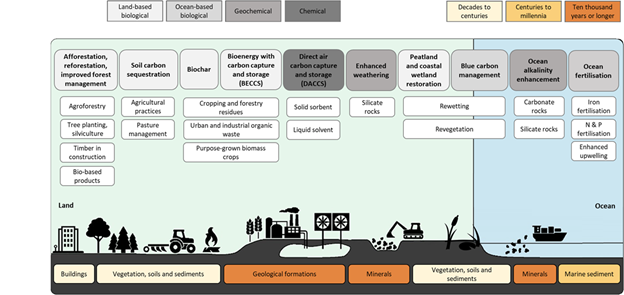
Under the proposed framework, carbon removal projects may take a nature-based or technological approach. The certification of carbon storage in long-lasting products or materials is also possible. Figure 1 provides an overview of different carbon removal methods, their concrete implementation, and the final storage medium.

Figure 1: Taxonomy for carbon removal (source: IPCC)

Importantly, carbon removal projects under EU certification have to comply with the QU.A.L.ITY criteria and need to:

  • be QUantifiable and QUantified;
  • Additional to existing climate benefits;
  • strive for Long-term storage;
  • contribute to sustainabilITY.

Given the frequent criticisms leveled at the methodologies and practices of the voluntary carbon market, establishing a regulatory framework for carbon removal activities is crucial. The criticism relates to the lack of oversight, transparency, trustworthiness, and climate impact (additionality) of the projects and certificates on this market. All of these can create significant problems for entities relying on voluntary carbon credits to offset or neutralise their emissions as part of their climate strategy, as highlighted in a recent investigation. A regulated market can restore confidence and ensure that all projects conform to the same rules regarding accounting, monitoring, reporting, and verification.

How would the EU certification framework work?

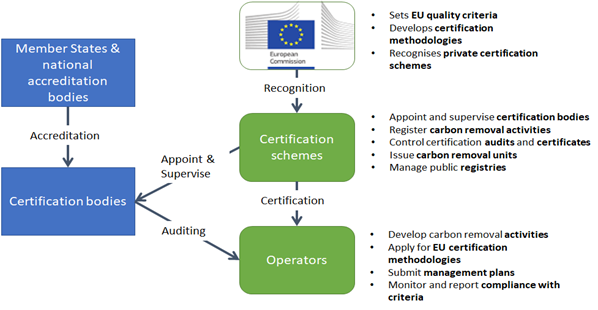
The certification framework will be based on criteria and certification methodologies to be developed by the EU Commission with the support of an expert group. The Commission then recognises private or public certification schemes that register carbon removal activities, control audits and certificates, maintain public registries, and also issue the carbon removal units. The operators of carbon removal activities, such as farmers, biochar producers or BECCS power plant operators need to be audited against the certification methodologies by accredited private certification bodies. Only after a successful audit and recognition by the certification scheme, would the operator’s carbon removal activities be certified by the certification scheme (compare Figure 2).

Figure 2: Working principle of the certification system (adopted by author from EU Commission)

The current proposal allows the EU Commission to adopt secondary regulations, such as delegated acts, to establish the different technical certification methodologies and to harmonise rules for certification and recognition of certification schemes. Given that carbon removal is a new and evolving field, new certification methodologies certainly need to be developed over time.

Next steps for developing the methodologies

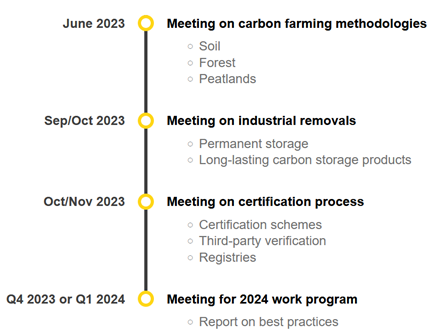
As mentioned above, the EU Commission has not developed detailed carbon removal methodologies or criteria yet. During the coming months the external expert group will develop tailored certification methodologies for different carbon removal activities. For reasons of transparency, related documents are being published and the first meeting took place on 7 March 2023, while carbon farming methodologies will be the topic of the next meeting on 21 and 22 June 2023. The timeline for the upcoming meetings of the expert group is depicted in Figure 3 (source: EU Commission).

Figure 3: Upcoming meetings of the expert group on carbon removal (source: EU Commission)

The Commission’s proposal also needs to be adopted by the European Parliament and the Council in a normal legislative procedure. At the end of April 2023, the responsible committee of the European Parliament published their first response with proposed changes to the Commission’s CRFC. Improving monitoring, liability and transparency mechanisms and a focus on long-term carbon removal are a priority for the Parliament to prevent low-quality removals. The report also calls for allowing permanent carbon storage outside of the EU Member states, if the carbon is captured in the EU and stored under similar rules to the EU. This would open the way to account for geological storage in countries such as Norway or Iceland.

Our assessment and issues to be solved

The proposal for the EU CRCF is commendable for being among the first globally to address the need for removals in climate policy and for stringent, transparent regulatory oversight on certification of removal activities. However, several issues still need to be resolved to ensure that the climate effect of the removal activities under the CRCF can become a reality: Removal activities through nature-based solutions could be short-lived and thus the climate impact could be reversed quickly. Furthermore, it is unclear how differing risks for reversals depending on the removal solutions will be dealt with and which actor will ultimately be (financially) responsible.

As there is currently a lack of details on the methodologies for the different removal activities and the certification schemes, the EU Commission, together with the expert group, needs to develop tailored rules for different removal activities. Especially the issues of reversal and liability mechanisms have to be addressed as well. It is essential that these rules are developed in a transparent and collaborative manner with input from stakeholders across the carbon removal industry to ensure that they are effective in promoting long-lasting carbon removal solutions while also providing clear guidelines on liability and risk management.

Reach out if you would like to learn more about the proposed regulation and understand how it impacts your business model or offsetting strategy.